

The transformative power of positive affirmations stand as pillars of personal development. They possess a remarkable ability to shape the human mind, transform perceptions, and alter life’s trajectory. These concise yet potent statements have garnered attention for their capacity to catalyze change in our lives, fostering happiness, joy, and overall satisfaction.
Understanding Positive Affirmations
Positive affirmations are short, powerful statements which are aimed at fostering a positive mindset and reshaping one’s beliefs and attitudes. These affirmations, when consistently practiced, aid in rewiring the subconscious mind, instilling constructive beliefs and attitudes. While the concept might seem simplistic, the effects can be profound.
The underlying principle is rooted in the notion that the mind is incredibly receptive to the words and thoughts we feed it. By consistently and intentionally affirming positive beliefs, individuals can reprogram their minds and steer their thoughts towards optimism, resilience, and success.
Influence on Life and Mindset
The impact of positive affirmations on our lives and mindsets is both intricate and far-reaching. They create a ripple effect that touches various aspects of our existence:
1. Mindset Reinforcement:
Affirmations serve as mental reinforcement. They counteract negative self-talk and self-doubt, enabling individuals to reframe their perspectives and instill confidence in their abilities.
2. Enhanced Self-Esteem and Confidence:
Through affirmations, individuals bolster their self-esteem, fostering a greater sense of self-worth and confidence in their capabilities.
3. Stress Reduction and Emotional Balance:
Positive affirmations aid in managing stress and promoting emotional balance, offering a more resilient approach to life’s challenges.
4. Increased Motivation and Goal Attainment:
By nurturing a positive mindset, affirmations stimulate motivation, propelling individuals towards their goals.
5. Improved Relationships:
Affirmations can impact interpersonal relationships by fostering a more positive and empathetic outlook, thereby improving connections with others.
The Synergy Between Affirmations and Brain Health Supplements
While the transformative power of affirmations is profound, combining these practices with brain health supplements can further enhance the process of positive change.
Brain health supplements support cognitive function, focus, and emotional well-being, synergizing with affirmations to optimize mental health and overall well-being.
1. Focus and Clarity Supplements:
Supplements targeting focus and clarity support mental sharpness, concentration, and cognitive performance. When coupled with affirmations, they aid in reinforcing a clear and focused mindset, helping individuals stay on track with their goals and intentions.
2. Mood Supplements:
Mood supplements play a crucial role in regulating emotions and promoting a balanced mental state. When combined with affirmations, they fortify the mind against negativity, fostering a more stable and positive emotional landscape.
3. Anti-Anxiety Supplements:
Anxiety supplements alleviate stress and anxiety, promoting relaxation and tranquility. When used alongside affirmations, they create a robust defense against anxious thoughts, fostering a calmer and more composed state of mind.
The Symbiotic Relationship: Affirmations and Supplements
The amalgamation of positive affirmations and brain health supplements creates a symbiotic relationship, reinforcing and amplifying their individual benefits. While affirmations sow the seeds of positive change, supplements act as catalysts, augmenting the process by providing the necessary nutrients and support for a healthier, more resilient mind.
1. Amplified Cognitive Function:
The combination enhances cognitive functions, promoting sharper focus, memory, and overall mental agility, allowing individuals to absorb affirmations more effectively.
2. Heightened Emotional Resilience:
The symbiosis between affirmations and supplements creates a shield against negative emotions, fortifying emotional resilience and promoting a more positive outlook on life.
3. Accelerated Personal Growth:
This synergy expedites personal growth by fostering a healthier mental state, empowering individuals to embrace change and work towards becoming the best version of themselves.
Embracing the Best Version of Yourself
Ultimately, the fusion of positive affirmations and brain health supplements is a powerful tool for self-improvement. According to the NIH, self-affirmation results in positive valuations of self and positive changes to the brain systems. It’s important to note that the key to reaping their benefits lies in consistency and dedication. This practice isn’t an overnight miracle but a journey towards self-empowerment and self-actualization.
Positive affirmations stand as lighthouses in the vast sea of personal development, guiding individuals toward a more fulfilling and joyful existence. These succinct, powerful statements have the remarkable ability to reshape the mind and influence one’s life positively. Their effects are far-reaching, impacting various aspects of life and fostering a mindset conducive to happiness, confidence, and productivity.
Unveiling the Essence of Positive Affirmations
The principle underlying their efficacy lies in the belief that our thoughts shape our reality. By intentionally repeating positive statements, individuals can reprogram their subconscious, thereby altering their perceptions and responses to the world around them.
Methods of Positive Affirmations
1. Verbal Affirmations:
Speaking affirmations aloud allows individuals to hear and internalize these positive messages. For instance, phrases like “I am capable and resilient” or “I attract positivity and abundance” can reinforce a mindset of strength and optimism.
2. Written Affirmations:
Jotting down affirmations in a journal or on sticky notes around living or working spaces keeps these positive messages in constant view, serving as daily reminders. Examples include “I am worthy of success” or “I am grateful for every experience in my life.”
3. Visualization:
Pairing affirmations with visualization techniques helps in manifesting desired outcomes. For instance, visualizing oneself achieving a goal while affirming “I am successful and deserving of all good things” can be a powerful combination.
4. Meditation and Affirmation Practices:
Incorporating affirmations into meditation or mindfulness practices amplifies their impact. During meditation, repeating affirmations like “I am at peace with myself and the world” can deeply influence one’s state of mind.
Dr. Daniel Amen offers a number of tips on how to maintain a positive mindset on a daily basis.
The Impact of Positive Affirmations on Life
The influence of positive affirmations extends across various domains:
1. Enhanced Self-Confidence and Belief:
Regularly practicing affirmations builds confidence and self-belief, fostering a more optimistic and resilient outlook.
2. Improved Emotional Well-being:
Affirmations contribute to emotional balance by reducing stress and anxiety, creating a more stable emotional landscape.
3. Increased Productivity:
When one feels better and is happier, they tend to be more productive. A positive mindset nurtured by affirmations encourages a focus on goals and tasks, fostering a more productive and accomplished life.
4. Wholeness and Confidence:
Affirmations help individuals feel more complete and confident in their abilities, aligning their actions with their true selves and aspirations.
Synergy Between The Transformative Power of Positive Affirmations and Brain Health Supplements
The integration of brain health supplements further amplifies the benefits of positive affirmations. Supplements aimed at cognitive function, mood regulation, and stress management complement the practice of affirmations, fostering a holistic approach to well-being.
1. Cognitive Function Support:
Supplements enhancing cognitive function aid in mental clarity and focus, fortifying the mind to absorb and internalize affirmations more effectively.
2. Mood Stabilization:
Mood supplements contribute to emotional stability, aligning with affirmations to promote a more positive and resilient emotional state.
3. Stress and Anxiety Management:
Supplements targeting stress and anxiety relief provide the necessary support to counter negative emotions, synergizing with affirmations to foster a calmer and composed state of mind.
Achieving Wholeness and Well-being
The amalgamation of positive affirmations and brain health supplements paves the way toward a more complete and fulfilling life. By consistently nurturing a positive mindset and providing the brain with essential support, individuals can progress towards a more holistic sense of well-being.
The Path to Unveiling Your Best Self
Embracing the synergy of affirmations and supplements is a journey toward self-empowerment and self-realization. The consistent practice of affirmations, supported by brain health supplements, acts as a compass guiding individuals towards their best selves.
One of the most effective supplement systems on the market today is the Bu Renewed Stay Sharp System. The Stay Sharp System features the most potent and the highest quality vitamins, minerals and herbs to support mood, brain fog, focus and clarity.
Positive affirmations are powerful tools that wield immense influence over our thoughts and emotions. They have the potential to shape our mindset, leading to a more fulfilling and positive life. But what if we could enhance this process through the aid of a vitamin supplement program?
The blend of positive affirmations and brain health supplements is a transformative force, propelling individuals towards a life brimming with satisfaction and contentment. Through this harmonious union, individuals can rewrite their narratives, embrace their true selves, and craft a reality that resonates with joy, confidence, and fulfillment. This comprehensive approach to personal growth offers a roadmap towards a life of abundance and wholeness.
The Science Behind Brain Health Supplements: Enhancing Clarity, Focus, and Emotional Balance
Brain health supplements are designed to support cognitive function, improve focus, and aid in emotion regulation. The ingredients have been well researched and formulated to enhance mental clarity, concentration, and emotional well-being.
Understanding the key components in these supplements sheds light on their impact on the mind and their synergy with the transformative power of positive affirmations.
Ingredients Enhancing Clarity and Focus
- Omega-3 Fatty Acids: Found in fish oil supplements, omega-3 fatty acids, particularly EPA and DHA, are crucial for brain health. They support cognitive function, enhance memory, and promote overall brain health. Studies have shown that these fatty acids play a vital role in reducing cognitive decline and improving focus.
- Phosphatidylserine: This phospholipid is a key component of cell membranes, especially in the brain. It aids in various cognitive functions, such as memory, learning, and attention and which is associated with improving focus and mental clarity.
- Bacopa Monnieri: An herb used in traditional medicine, Bacopa Monnieri has been linked to improved cognitive function. It may enhance memory and cognitive performance, promoting better focus and mental clarity.
- Ginkgo Biloba: Ginkgo Biloba extract is known for its potential in boosting cognitive function, particularly memory and concentration. It enhances blood circulation to the brain, which can aid in better focus and mental acuity.
Ingredients Contributing to Calmness and Anti-Anxiety Effects
- L-Theanine: Found in green tea, L-Theanine promotes relaxation without causing drowsiness. It helps in reducing stress and anxiety by increasing the production of serotonin and dopamine in the brain.
- Ashwagandha: An adaptogenic herb, Ashwagandha has been traditionally used to alleviate stress and anxiety. In fact, it helps regulating cortisol levels, and thus reducing stress and promoting a calmer state of mind.
- Valerian Root: Valerian root is a herb commonly used as a natural remedy for sleep disorders and anxiety. It contains compounds that may help calm the mind and nervous system, aiding in stress reduction.
- Passionflower Extract is known to help reduce anxiety. Studies suggest that it can increase levels of gamma-aminobutyric acid (GABA) in the brain, a neurotransmitter that promotes relaxation and reduces anxiety.
Synergy Between Supplements and the Transformative Power of Positive Affirmations
- Enhanced Cognitive Receptivity: Ingredients promoting focus and clarity prepare the brain to absorb affirmations effectively, allowing for better internalization of positive thoughts.
- Emotional Resilience: The calming and anti-anxiety effects of certain supplement ingredients complement the affirmations, further reinforcing a positive emotional state and reducing the impact of negative thoughts.
- Overall Mental Well-being: Together, these supplements and affirmations create a supportive environment for mental well-being, fostering a more positive, clear, and resilient mindset.
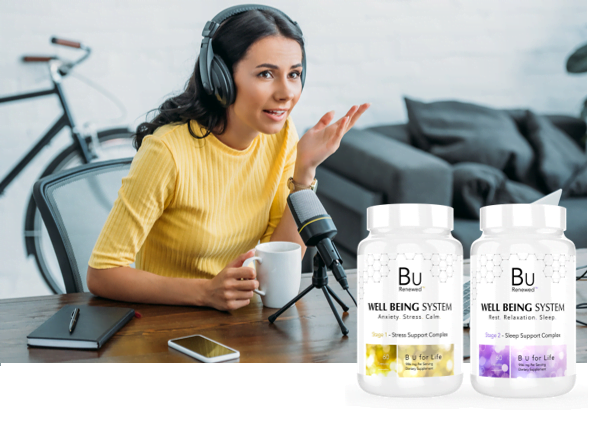
Bu Renewed
Bu Renewed is one of the most respected and highest quality brands which delivers the fastest results and to achieve the highest level of support available. Each system is comprised of two stages and provides all the necessary nutrients to support one’s daily functions. And, coupled with the transformative power of affirmations produces a long lasting effect on living a joy filled life.
The Well Being System at Bu Renewed is a carefully crafted supplement program which packs all the vitamins, minerals and herbs needed to achieve the ultimate results on a daily basis. Stage 1, the morning formula, helps with anxiety and stress and promotes calm. Stage 2, the evening formula, allows one to reach the opportunity to reset and reach rest, relaxation and a good night’s sleep.
The Stay Sharp System which can also be found at Bu Renewed, supports memory, focus and clarity. Stage 1, the morning formula, is the neuro complex to help brain functions. Stage 2, the evening formula, promotes mood, cognition and cell support. It is said to be your best insurance plan for your future mental and cognitive health.
Conclusion
The amalgamation of these scientifically researched ingredients in brain health supplements aligns with the principles of the transformative power of positive affirmations. The key is they both help one to find mental clarity, emotional balance, and an overall sense of well-being.
The incorporation of supplements like the Well Being System and the Stay Sharp System, alongside the practice of the transformative power of affirmations stands as a robust approach to nurturing a healthier and more resilient mind.
The combination of these elements represents a holistic strategy toward achieving a more balanced, focused, and emotionally stable mental state, facilitating the journey towards self-improvement and a fulfilling life